The reasons › What rarely causes it
Offended, lazy, or wanting to sin
These are the reasons believing members most often assume, and the reasons former members rank dead last. Four percent called being offended a major factor. Four percent said wanting to sin.
What members were taught
People leave the Church for four reasons: they were offended, they wanted to sin, they got lazy about prayer and scripture study, or they read anti-Mormon literature and were deceived. Deep down they know it is true. They will be back when they repent.
What the record shows
These are the reasons believing members most often assume, and the reasons former members rank dead last. Four percent called being offended a major factor. Four percent said wanting to sin.
Ask a believing Latter-day Saint why people leave and the answer usually comes from a short list: they were offended, they wanted to sin, they got lazy and stopped praying and reading, they never had a testimony, or they read anti-Mormon literature and were deceived. General conference talks have reinforced each of these for decades.
The 2011 survey tested the list, and the result is the single clearest finding in it. Of twenty-one general factors respondents could rate, "I was offended by someone in the church" and "I wanted to engage in behaviors viewed as sinful by the church" came in twentieth and twenty-first. Four percent called either a major factor. "Lack of meaningful friendships" was nineteenth at six percent. By contrast, the people giving these answers were bishops, missionaries, and auxiliary presidents who had served for decades. Whatever they were, they were not lazy.
The written comments show how much damage the assumption does. "Most of us are good, honest, ethical people just trying to live honest lives," one respondent wrote. "I have not come out to my family, mostly because I do not want them to think I am some sort of vile sinner, being deceived by Satan." Another: "No one offended me. I enjoyed the ward members and still consider them my friend. I obey the law of chastity and WOW. I am faithful to my wife. It's the history and it's not just a single issue."
If you take one thing from this site, take this. The people who left did not leave because of you, and they did not leave because of what they wanted to do on Saturday night. They left because of what they learned, and because there was no one at church they could tell. Here is what they asked of the people who stayed.
In their words
“I'm going to admit, as a bishop and as a leader, in all my callings, as a missionary, I was always taught the same thing: that people leave either because they were offended or because they couldn't hack it. So I hate that I used to think that about people, and I apologize for that. But I don't blame people for thinking that, because that's the standard narrative in the church: that there's no legitimate reason to step away.”
“No, I left because the church claims aren't true. And I chose to drink beer as soon as I put two and two together and realized that all the claims of prophecy and leadership and all those other things were just more signs along the way: this is another manifestation that this isn't God's church, that it isn't being led by inspiration.”
“I had a really strong sense that I wanted my own story to be my own story, and my own choice to be my own choice, versus having the people around me start pointing at the other elements that might have darkened my path. Like I had no brain of my own, or agency of my own, or thoughts of my own.”
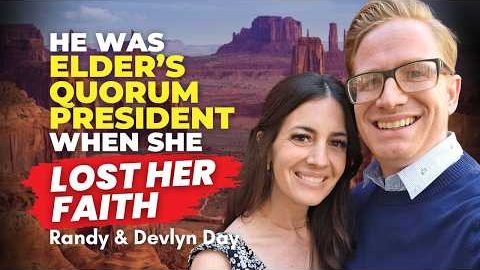
“When anyone would say, oh, they just left the church because they wanted to sin: I had no desire to sin... I continued wearing garments after I didn't even believe in them anymore for at least two years. I had never drank, I'd never done drugs, I had never done anything. And I didn't really have a huge desire. I wouldn't have given up my eternity for those things.”
“I was never offended. I didn't leave the church because I was offended by anyone. I've now been offended... They didn't offend me when I was a member of the church, but since I've left, they have.”
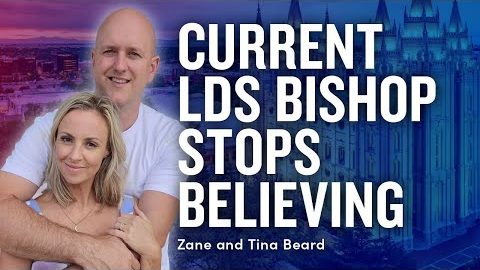
“I'm a currently serving bishop.”
“We didn't think this would happen in a million years. And we weren't looking for this. We didn't want this to happen. And that's why we did so much studying, is because I didn't want it to not be true. I wanted to stay in. I wanted it to be true. I wanted Joseph Smith to be who they said he was. I wanted the church to be what they said it was.”
Quotes are taken from machine-made transcripts of Mormon Stories interviews and may contain small transcription errors. Each links to the moment in the recording so you can hear it for yourself.
What people actually name
From the crowd-sourced 2014 comprehensive list, lightly edited.
- 87% of the men and 77% of the women in the survey had served in at least one calling; 73% of the men had served full-time missions.
- {'More than half of the men and 40% of the women had served in leadership': 'bishoprics, quorum and auxiliary presidencies, stake councils.'}
- Respondents named, on average, fifteen major factors each. The idea of a single trigger, an offense or a temptation, does not match the data.
- In the trend analysis, offense, desire to sin, lack of friends, and local leaders were all declining in importance over time.
- Respondents who did cite a desire to "sin" were disproportionately under thirty, and usually meant things like coffee, alcohol, or premarital sex, rejected along with the theology that had forbidden them.
Hear it first-hand
 Why People Leave the LDS Church and How We Can Help Mormon Stories 111, 2010
John Dehlin's original presentation, recorded before the survey. The talk that became this project.
 Top 5 Myths and Truths about Why Committed Mormons Leave the Church Mormon Stories 400, 2012
The survey findings, presented against the five explanations believing members most often give.
More episodes on this, ranked
Mormon Stories interviews where this comes up most, beyond the ones chosen above.
-
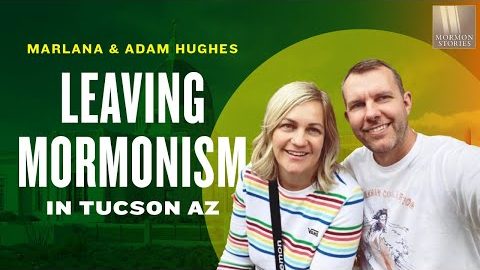
 LDS Bishop Adam and Marlana Hughes – Leaving Mormonism in Tucson, Arizona | Ep. 1360
Mormon Stories 1360, 2020 · 124k views · hear a moment at 4:29:43
-
 My LDS Conversion and De-Conversion – Heather | Ep. 139-140
Mormon Stories 139–140, 2010
-
 684-686: Margi Dehlin’s Mormon Transition
Mormon Stories 684, 2016
-
 Why More Mormons Don’t Leave the Church w/ John Larsen & Carah Burrell | Ep. 1720
Mormon Stories 1720, 2023 · 70k views · hear a moment at 44:58
-
 Recovering after Mormonism – Dr. Steven Hassan | Ep. 1744
Mormon Stories 1744, 2023 · 278k views · hear a moment at 52:19
-
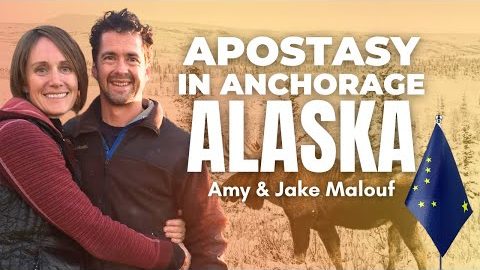
 657: Apostasy in Anchorage, Alaska – The Excommunication of Amy and Jake Malouf
Mormon Stories 657, 2016 · 32k views · hear a moment at 1:05:57
Ranked by the Mormon Stories episode recommender: what the transcripts say, what the titles and categories say, how widely the videos are watched, and what editors have pinned. Rebuilt with the site. Video plays here when you press play; the episode page has the audio and transcript.
Go deeper
- Top 5 Myths and Truths about Why Committed Mormons Leave (Mormon Stories 400) — John Dehlin's 2012 presentation of these findings