The reasons › What church life felt like
The culture
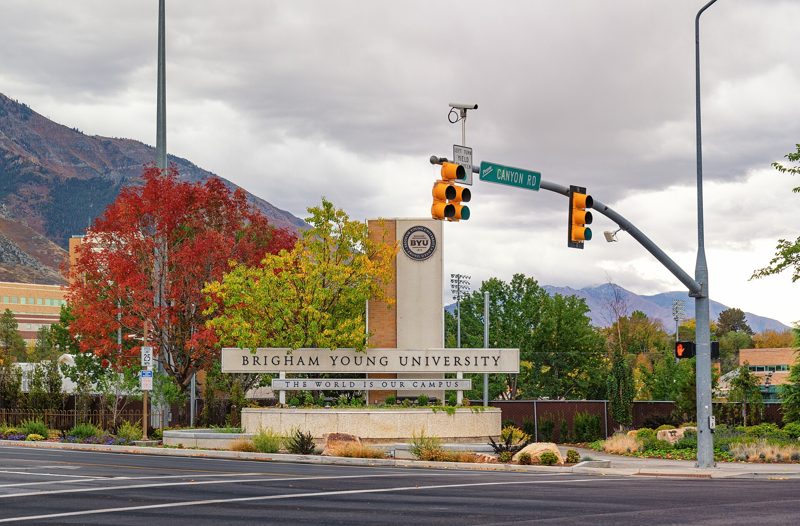
Judgment, perfectionism, conformity, shame about bodies and sex, politics from the pulpit, and no room for anyone who does not fit the mold. Respondents under thirty rated this higher than anyone.
What members were taught
Members are a peculiar people, in the world but not of it. High standards of dress, language, entertainment, and obedience set them apart and keep them safe. Questions are welcome, but doubting is dangerous, and public criticism is apostasy.
What the record shows
Judgment, perfectionism, conformity, shame about bodies and sex, politics from the pulpit, and no room for anyone who does not fit the mold. Respondents under thirty rated this higher than anyone.
A third of respondents named the culture as a major factor, and among those under thirty it was one of the most important reasons of all. It is also the category where the 2014 crowd-sourced list grew longest, with more than thirty distinct items. Reading them together, a pattern emerges that respondents kept describing in the same words: there was no room to be anything other than what the culture expected.
The pressures fall unevenly. Young people described a culture of perfectionism in which the standard was always just out of reach and guilt was the constant companion. Women described being valued for one role. Single members past their twenties, divorced members, and members in mixed-faith marriages described being treated as problems to be solved. Intellectually curious members described learning that questions were welcome only if they had approved answers, and that publishing the wrong ones could cost them their membership. Progressive members described sitting through political commentary from the pulpit and being told the Church was politically neutral.
The comments also make clear that culture alone rarely broke a shelf. It was the setting in which the other reasons did their work. A member who discovered the seer stone or the polyandry needed someone to talk to, and the culture ensured that anyone they talked to would assume they had sinned. "Being accused of adultery, pornography, 'wanting to sin,' 'being weak,' 'reading anti-Mormon literature,'" the list records, "when expressing legitimate doubts." The culture did not cause the doubt. It made sure the doubt had nowhere to go but out.
In their words
“I had a really strong sense that I wanted my own story to be my own story, and my own choice to be my own choice, versus having the people around me start pointing at the other elements that might have darkened my path. Like I had no brain of my own, or agency of my own, or thoughts of my own.”
“If God asked you to kill me, would you do it? Who do you love more, me or God? If I left the church, would you still love me? If God said you had to give up one of your eight children, who would you give up? If I was gay, would you still love me? If the prophet told you to kill me, would you do it? If I don't feel the spirit, is there something wrong with me?”
“I finally decided I was going to tell my wife about it and the journey, because she didn't know yet. I remember sitting down with her and just saying, I need to talk to you about this. And I'm not good at these type of things. I mean, who's prepared for this type of thing? And I just vomited all the information. Too much information. Joseph Smith, Brigham Young, Blacks in the priesthood, polygamy, everything. Book of Abraham...”
Quotes are taken from machine-made transcripts of Mormon Stories interviews and may contain small transcription errors. Each links to the moment in the recording so you can hear it for yourself.
What people actually name
From the crowd-sourced 2014 comprehensive list, lightly edited.
- A culture of certainty in which "I know" is required and "I believe" is suspect.
- Suspicion of questions, learning, and dissent; doubters labeled apostate, weak, prideful, or deceived.
- Perfectionism and the guilt of never doing enough; the "checkbox" gospel.
- {'Shame about sexuality and the body': 'modesty lessons, the "licked cupcake," the "pine box."'}
- Political conservatism assumed and preached; liberals, immigrants, and the poor treated as suspect.
- No place for singles, the divorced, mixed-faith couples, LGBTQ members, the disabled, or the merely different.
- Shallow relationships; an unwillingness to speak about real things at church.
- Hostility to intellectuals, scientists, and symposia; the demonization of Sunstone and Dialogue.
- Marriage pressed early, large families expected, and staying married at any cost.
- Materialism, appearance, and status in Utah wards.
- Emphasis on the United States and Utah, and disrespect for other cultures, in a church that calls itself global.
- Members told to report one another, as at BYU's Honor Code Office.
Hear it first-hand
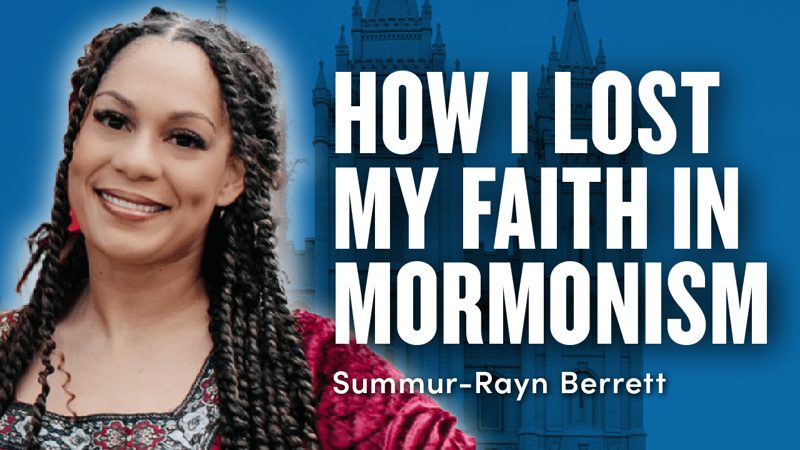 How I lost faith in Mormonism, Summur-Rayn Berrett Mormon Stories 1888, 2024
A recent, ordinary, and representative account of the whole arc.
 How to improve your marriage after one of you loses their testimony Mormon Stories 159, 2010
The single most requested topic in the survey's written comments.
More episodes on this, ranked
Mormon Stories interviews where this comes up most, beyond the ones chosen above.
-
 254: Exploring the Future for Uncorrelated Mormons with John Dehlin
Mormon Stories 254, 2011
-
 397-399: John Dehlin and Faith Reconstruction
Mormon Stories 397, 2013
-
 Mormon Bishops Discuss Their Experiences | Ep. 1862
Mormon Stories 1862, 2024 · 261k views · hear a moment at 22:51
-
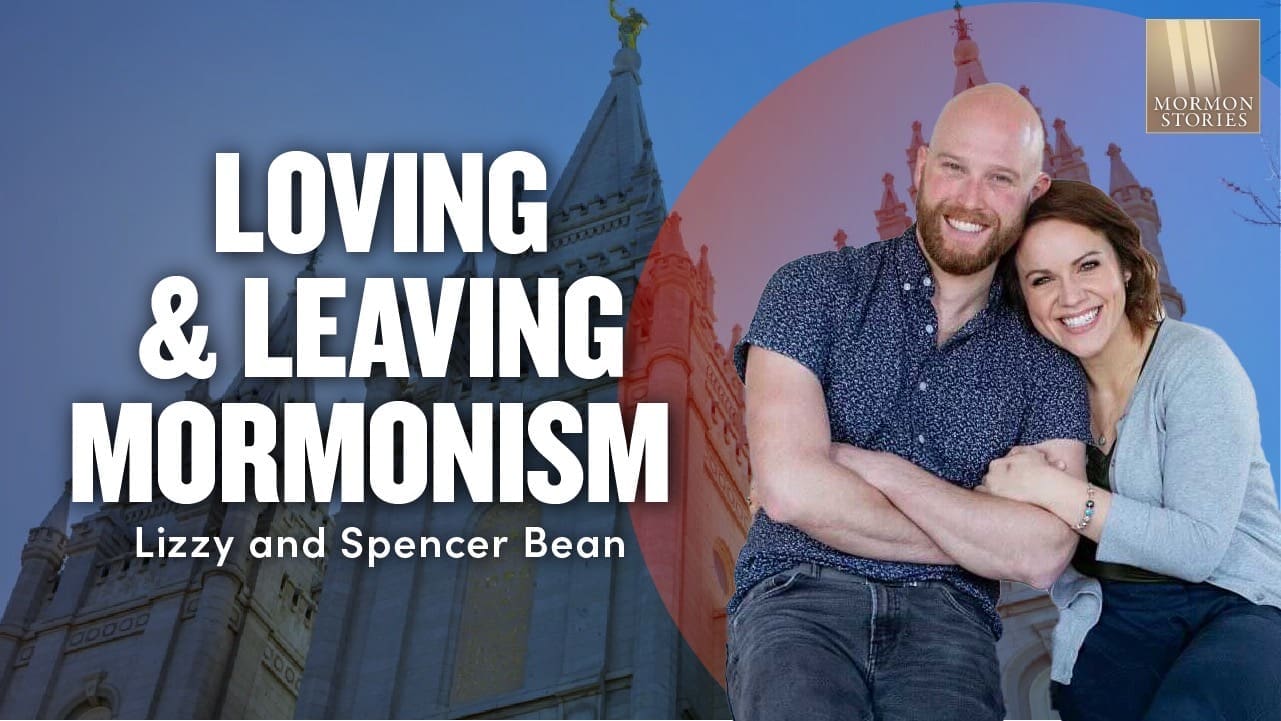 Loving & Leaving Mormonism – Lizzy & Spencer Bean | Ep. 1558-1560
Mormon Stories 1558, 2022 · 50k views · hear a moment at 1:35:51
-
 The “Therapist” that Ruined 8 Passengers – Experts React | Ep. 1807
Mormon Stories 1807, 2023 · 586k views · hear a moment at 1:18:43
-
 Staying Active in the Mormon Church as a semi- or non-believer | Ep. 758
Mormon Stories 758, 2017 · 7.1k views · hear a moment at 1:14:00
Ranked by the Mormon Stories episode recommender: what the transcripts say, what the titles and categories say, how widely the videos are watched, and what editors have pinned. Rebuilt with the site. Video plays here when you press play; the episode page has the audio and transcript.