The reasons › How the history was told
Race and the priesthood
For 126 years Black members were barred from the priesthood and the temple, on the authority of prophets who taught the ban was God's will. In 2013 the Church disavowed the reasons but not the men who gave them.
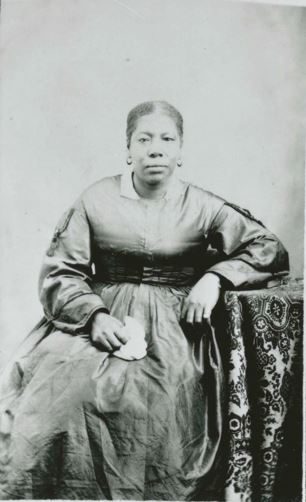
What members were taught
God withheld the priesthood from Black members for reasons He has not fully revealed. Prophets taught it, so it was His will. In 1978 He revealed that the time had come to extend it to all worthy men, and the Church rejoiced.
What the record shows
For 126 years Black members were barred from the priesthood and the temple, on the authority of prophets who taught the ban was God's will. In 2013 the Church disavowed the reasons but not the men who gave them.
The priesthood and temple ban is the issue on which the Church has moved the furthest and apologized the least. Between 1852 and 1978, members of African descent could not hold the priesthood, enter the temple, or be sealed to their families. Prophets and apostles taught that this was God's will, offered reasons for it drawn from the curse of Cain and the pre-mortal life, and told members who questioned it that they were out of harmony with the Lord.
The 2011 survey found the ban a major factor for 55% of respondents, and the Church's stance on race more broadly a major factor for 43%. The trend analysis found the issue holding steady at high importance across every age group. Notably, it was one of a few issues whose importance correlated with staying rather than leaving; the survey's authors suggested that members who weighted it heavily may have seen the 1978 change as evidence the Church could correct itself.
The Church's December 2013 essay disavowed the theories and condemned racism "in any form." What it did not do is say that the ban was a mistake, or that the men who taught it as revelation were wrong. That distinction is the one respondents kept raising. If a prophet could teach for a century that God required the exclusion of a race, and be wrong, the claim that prophets will never lead the Church astray is unavailable. And if he was right, the God being described is one many respondents said they could no longer worship.
What people actually name
From the crowd-sourced 2014 comprehensive list, lightly edited.
- Joseph Smith ordained Black men, including Elijah Able; Brigham Young ended the practice in 1852 and taught that Black people bore the curse of Cain.
- Every Church president from Young to Kimball upheld the ban; several taught that Black people had been less valiant in the pre-mortal life.
- The ban ended in 1978, a decade after the civil rights movement and amid pressure over BYU athletics and temple building in Brazil.
- The 2013 Gospel Topics essay disavows the theories used to justify the ban but does not say the ban itself was wrong or apologize for it.
- Book of Mormon passages associating dark skin with a curse, and decades of teaching that Native Americans were Lamanites who would become "white and delightsome."
- Church opposition to civil rights legislation in the 1960s, articulated by Ezra Taft Benson among others.
What the Church has said
- Gospel Topics essay: Race and the Priesthood — "Today, the Church disavows the theories advanced in the past"
Hear it first-hand
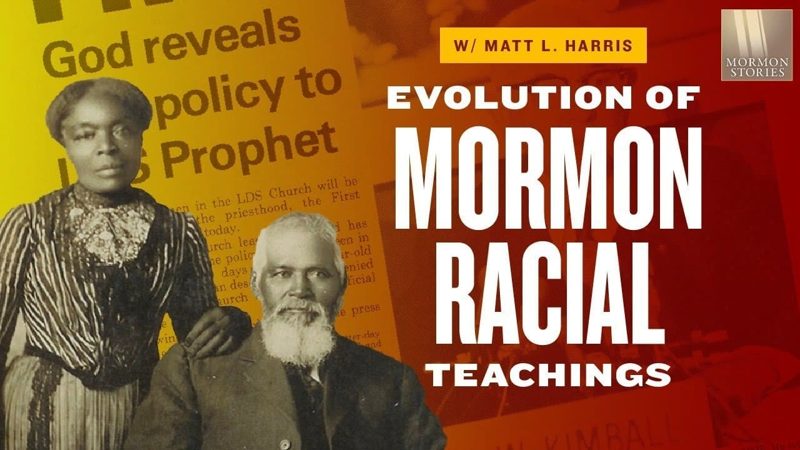 Whiteness theology and the evolution of Mormon racial teachings, with Matt Harris Mormon Stories 1366, 2020
A historian traces the priesthood ban from Brigham Young to the 2013 essay.
 Gregory Prince on David O. McKay and the priesthood ban Mormon Stories 4, 2005
One of the first Mormon Stories episodes. McKay's biographer on a prophet who wanted to lift the ban and did not.
More episodes on this, ranked
Mormon Stories interviews where this comes up most, beyond the ones chosen above.
-
 Race & Mormon Scripture Pt 2 w/ LDS Discussions – 22 | Ep. 1665
Mormon Stories 1665, 2022 · 24k views · hear a moment at 1:10:17
-
 “Not One-Drop” of African Blood Rule | Second-Class Saints Ep. 1 w/ Dr. Matt Harris | Ep. 1906
Mormon Stories 1906, 2024 · 67k views · hear a moment at 2:15:44
-
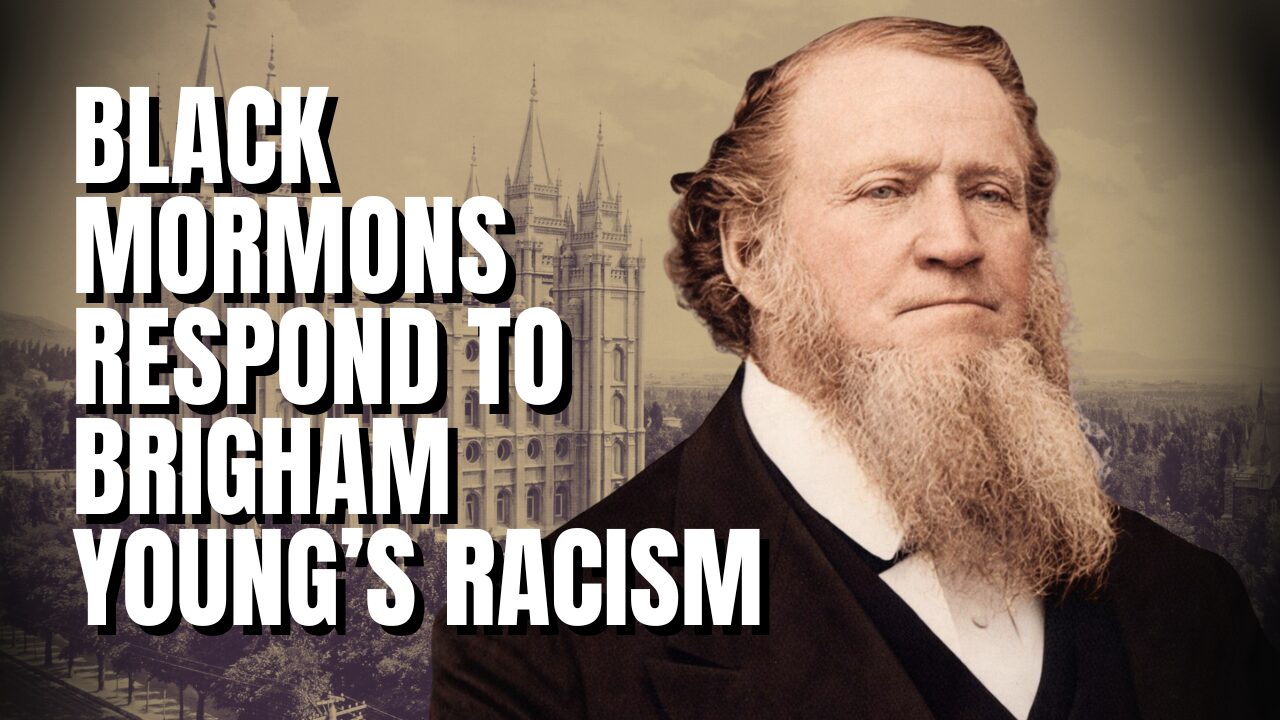 Black Mormons Respond to Brigham Young’s Racism | Ep. 1916
Mormon Stories 1916, 2024 · 29k views
-
 Problematic Mormon Revelations after Joseph Smith w/ LDS Discussions Ep 38 | Ep. 1749
Mormon Stories 1749, 2023 · 145k views · hear a moment at 47:52
-
 436-437: Elijah Abel – Early Black Mormon Priesthood Holder w/ Russell Stevenson
Mormon Stories 436–437, 2013
-
 Mormon Priesthood and Temple Ban: From Policy to “Doctrine” | Second-Class Saints Ep. 2 w/ Dr. Matt Harris | Ep. 1910
Mormon Stories 1910, 2024 · 37k views · hear a moment at 36:10
Ranked by the Mormon Stories episode recommender: what the transcripts say, what the titles and categories say, how widely the videos are watched, and what editors have pinned. Rebuilt with the site. Video plays here when you press play; the episode page has the audio and transcript.